If you are starting a healthcare, medical, dental, emergency services, or clinical training program, your school may require you to complete a respirator fit test before you can begin labs, clinical rotations, internships, or hands-on training.
For many students, this requirement comes up quickly during onboarding. You may be asked to upload proof of a Qualitative Fit Test, sometimes called a QLFT, N95 fit test, mask fit test, or respirator fit test.
CNS Occupational Medicine provides respirator fit testing services to help students meet school, program, and clinical placement requirements.
Here’s what you need to know.
What Is a Qualitative Fit Test?
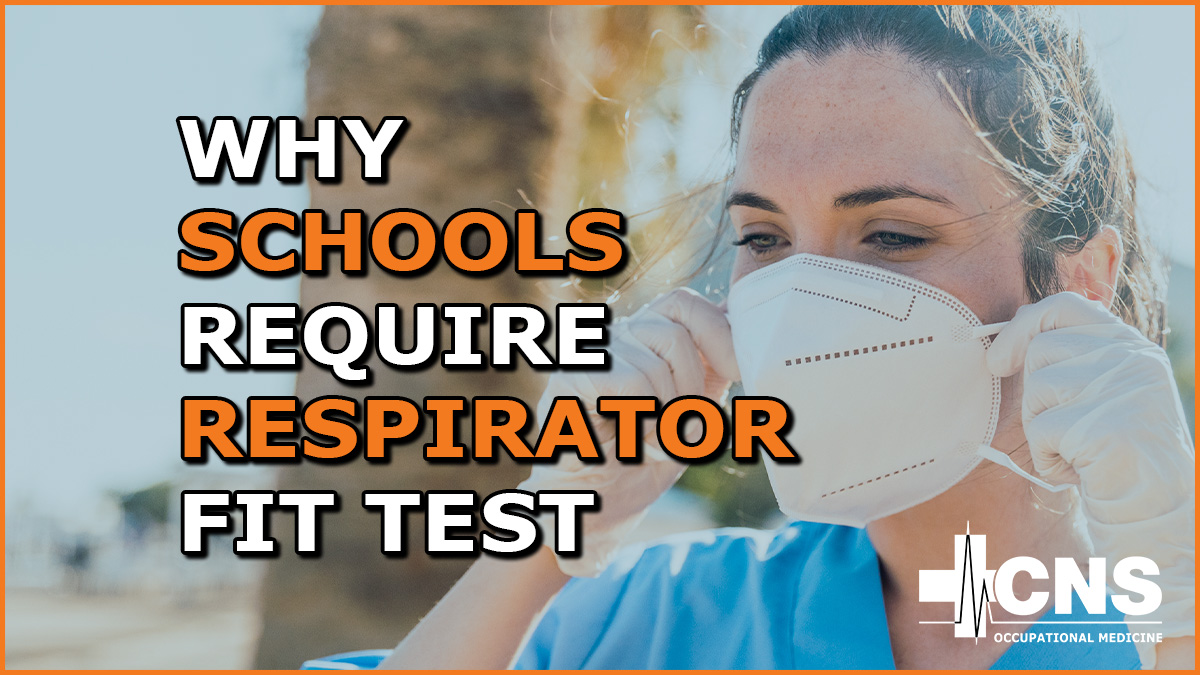
A Qualitative Fit Test is a pass/fail test used to determine whether a tight-fitting respirator, such as an N95 mask, properly seals to your face.
The purpose of the test is simple: your respirator needs to fit correctly so it can help protect you in environments where airborne particles, infectious diseases, or other respiratory hazards may be present.
During a qualitative fit test, a trained tester uses a test agent, such as a sweet or bitter solution, to check whether you can detect leakage around the respirator seal.
- If you can taste the solution during the test, the respirator may not be fitting correctly.
- If you cannot detect the solution while performing the required movements, the fit test is passed for that specific respirator model and size.
Why Do Schools Require Respirator Fit Testing?
Schools require fit testing because many students will be entering healthcare or clinical environments where they may need to wear respiratory protection.
This is especially common before clinical rotations, patient care experiences, lab work, externships, or field training. Hospitals, clinics, nursing homes, emergency response settings, and other healthcare partners often require students to have documentation showing they have been fit tested before they are allowed on site.
A school may ask for a fit test to help confirm that the student:
- Can safely wear the required respirator
- Has been fitted for the correct respirator model and size
- Understands how the respirator should be worn
- Has documentation for clinical or program compliance
- Meets the requirements of the school, healthcare facility, or training site
What Types of Students May Need a Fit Test?
Respirator fit testing is most often required for students entering healthcare-related programs or programs that include clinical or patient-facing experience.
Common examples include:
- Nursing students
- Medical assistant students
- Dental hygiene and dental assisting students
- Respiratory therapy students
- Radiology and diagnostic imaging students
- EMT and paramedic students
- Surgical technology students
- Physician assistant students
- Nurse practitioner students
- Medical students
- Occupational therapy and physical therapy students
- Veterinary technician students
- Laboratory or clinical science students
- Other healthcare or allied health students entering clinical sites
Requirements vary by school and program. Some students may need a fit test before the first semester begins, while others may need one before clinical rotations start.
What Type of Respirator Fit Test Do Students Usually Need?
Most students are asked to complete a Qualitative Fit Test for an N95 respirator.
An N95 is a tight-fitting filtering facepiece respirator commonly used in healthcare settings. Because the respirator must seal properly to the face, students need to be tested on the specific make, model, and size they will be approved to wear.
A qualitative fit test is commonly used for N95 respirators because it is practical, efficient, and accepted for many school and healthcare program requirements.
However, every school may have its own instructions. Before scheduling, students should check whether their program requires:
- A specific respirator brand or model
- A specific type of fit test
- A school form to be completed
- Medical clearance before fit testing
- Annual fit testing
- Documentation uploaded by a certain deadline
What Does a Qualitative Fit Test Include?
A qualitative respirator fit test usually includes several steps.
First, the student may be asked questions or directed to complete required paperwork. Some schools may also require proof of respirator medical clearance before the fit test can be performed.
Next, the fit tester will review the respirator and explain how it should be worn. This may include how to place the mask on your face, how to position the straps, how to adjust the nosepiece, and how to perform a user seal check.
The tester will then place a fit test hood over your head while you wear the respirator. A test solution is introduced into the hood while you perform a series of movements and breathing exercises.
These exercises may include:
- Normal breathing
- Deep breathing
- Turning your head side to side
- Moving your head up and down
- Talking or reading a short passage
- Bending or moving as directed
- Normal breathing again
If you do not taste the test solution during the exercise series, you pass the test for that respirator model and size.
If you do taste the solution, the respirator may not fit properly. In that case, another respirator model or size may need to be tried.
What Should Students Bring to a Fit Test Appointment?
Before your appointment, check your school’s instructions carefully. Students should bring:
- Any fit test form required by the school
- School ID or photo ID
- Respirator model required by the school, if your school provides or specifies one
- Medical clearance documentation, if required
- Program instructions or upload requirements
- Glasses or safety eyewear if you are required to wear them during clinical work
Students should also avoid eating, drinking anything besides water, chewing gum, or smoking shortly before the test, since this may interfere with the taste-based testing process.
Can Facial Hair Affect a Fit Test?
Yes. Tight-fitting respirators must seal directly to the face. Facial hair, stubble, or anything that interferes with the sealing surface can prevent the respirator from fitting correctly.
Students who need a fit test should arrive clean-shaven in the area where the respirator seals to the face. This helps avoid delays, failed testing, or the need to reschedule.
How Long Does a Student Fit Test Take?
A qualitative fit test is usually a quick appointment, but students should allow enough time for paperwork, instruction, respirator selection, testing, and documentation.
The appointment may take longer if the first respirator does not fit and another size or model needs to be tested.
What Documentation Will Students Receive?
After a successful fit test, students typically receive documentation showing:
- Student name
- Date of fit test
- Type of fit test performed
- Respirator make, model, and size
- Pass/fail result
- Testing provider information
This documentation can usually be submitted to the school, clinical program, or student health portal as proof of completion.
How Often Do Students Need a Fit Test?
Many programs require fit testing before clinical placement and may require it annually after that. Students may also need a new fit test if they are assigned a different respirator model or size, or if physical changes affect the respirator seal.
Because requirements vary, students should follow their school’s instructions and any deadlines provided by their program or clinical site.
How to Get a Qualitative Fit Test for School
Whether you are entering nursing school, dental hygiene, medical assisting, respiratory therapy, EMT training, or another healthcare program, our team can help you understand what to bring and complete the required respirator fit testing.
CNS Occupational Medicine can help you complete the process and receive the documentation you need at our Lancaster PA, Harrisburg PA, or Georgetown DE clinics.
Before scheduling, review your school’s requirements so you know whether your program has a specific form, respirator model, or medical clearance requirement.
To schedule a qualitative fit test:
- Contact CNS Occupational Medicine.
- Tell our team you need a fit test for school.
- Bring any required school forms or instructions.
- Complete the fit test appointment.
- Submit your documentation to your school or clinical program.
Contact CNS Occupational Medicine today to schedule your qualitative fit test appointment at 800.551.9816 or info@cnsoccmed.com.