OSHA isn’t getting more aggressive, it’s getting smarter and employers who adapt early will be the ones who avoid citations, reduce risk, and build safer, stronger operations.
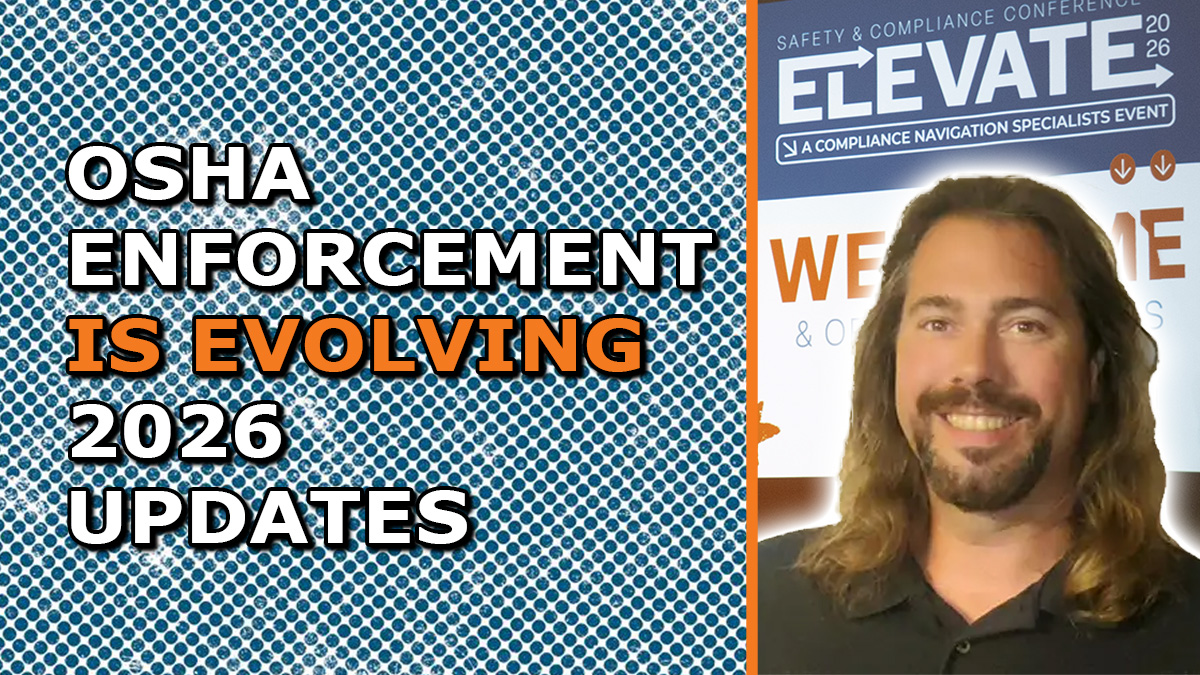
At the CNS ELEVATE 2026 Safety & Compliance Conference, Shawn Renaldi, Compliance Assistance Specialist with OSHA’s Harrisburg Area Office, delivered a timely and practical breakdown of where OSHA enforcement is today and where it’s headed.
For employers, especially in high-risk industries like transportation, construction, and warehousing, the message was clear: OSHA isn’t just enforcing rules, it’s evolving how it enforces them.
Below is a breakdown of the most important insights from Renaldi’s presentation and what they mean for your safety program.
OSHA Is Balancing Enforcement with Compliance Assistance
One of the biggest themes from the presentation was OSHA’s dual role: Enforcement agency and Compliance partner.
Programs like OSHA’s On-Site Consultation Program remain a major focus. These services are free, confidential, and separate from enforcement.
For small and mid-sized employers, this is one of the most underutilized tools available.
The takeaway: If you wait for OSHA to show up through enforcement, you’re already behind.
Debunking OSHA Myths That Still Hurt Employers
Renaldi addressed several persistent “urban legends” that continue to create confusion:
“Every OSHA inspection results in a citation”
- Reality: Many inspections do not result in citations.
- OSHA often provides guidance, hazard alerts, or informal corrections.
“OSHA can randomly shut down your business”
- Reality: OSHA cannot shut down operations at will.
- Imminent danger shutdowns require a federal court order.
“Compliance officers work on commission”
- Reality: OSHA is federally funded, penalties go to the U.S. Treasury, not inspectors.
Why this matters: Believing these myths leads to fear-based decision-making instead of proactive compliance strategy.
OSHA’s Mission: The Long-Term Impact
Renaldi reinforced OSHA’s broader mission using long-term safety data:
- Worker fatalities have dropped significantly since OSHA’s creation
- Injury and illness rates have declined dramatically over time
- Safety improvements are the result of collaboration, not just enforcement
This aligns with OSHA’s ongoing strategy:
- Partner with employers
- Promote prevention
- Use enforcement as a tool, not the only tool
Enforcement Is Becoming More Targeted and Data-Driven
The biggest shift employers need to understand: OSHA enforcement is no longer reactive, it’s predictive.
Heat Is the #1 Emerging Enforcement Priority
One of the most critical updates discussed and reinforced by current OSHA activity is the Heat National Emphasis Program (NEP).
- Targets 55 high-risk industries
- Uses injury, illness, and citation data to prioritize inspections
What’s changed:
- Random inspections can occur on heat advisory days
- Inspections can expand if heat hazards are observed
- Stronger guidance for citations and program evaluation
Key insight:Even without a finalized heat rule, OSHA is enforcing heat safety under the General Duty Clause. If heat exposure exists in your operation, you are already on OSHA’s radar.
OSHA’s Regulatory Agenda: What’s Coming Next
Renaldi highlighted OSHA’s forward-looking regulatory priorities, including:
Federal Heat Standard (in progress)
- Would formalize requirements for:
- Water
- Rest breaks
- Shade
- Acclimatization
- Still in rulemaking phase, but enforcement is already happening
National Emphasis Programs (NEPs)
- Continue to drive inspection focus
- Expand OSHA’s reach into targeted industries
- Reinforce hazard-specific enforcement
Takeaway: You don’t need a new regulation to get cited, OSHA is using existing authority aggressively.
Most Frequently Cited Standards (What OSHA Is Actually Writing Up)
Renaldi’s data reinforced a familiar, but important, reality. The same hazards continue to dominate OSHA citations:
- Fall Protection
- Hazard Communication
- Ladders
- Lockout/Tagout
- Respiratory Protection
- Scaffolding
- Powered Industrial Trucks
- PPE (Eye & Face)
- Machine Guarding
Insight for employers: These aren’t “new” problems, they’re persistent ones and OSHA knows exactly where to look.
OSHA’s Strategic Shift: Meet Employers Where They Are
A key theme from the “Current Initiatives” portion:
- OSHA is focusing on engagement across all maturity levels
- Emphasis on:
- Early-stage safety programs
- Mid-level improvements
- Advanced partnerships (VPP, alliances)
This is where CNS clients have a major opportunity: Align safety programs not just for compliance but for continuous improvement.
The Bigger Picture: Enforcement + Prevention + Partnership
Renaldi’s presentation ultimately reinforced a critical shift in OSHA’s philosophy: The future of OSHA is not just enforcement, it’s influence.
Employers that succeed in this environment will:
- Use compliance assistance programs proactively
- Build documented, defensible safety systems
- Focus on high-risk hazards (especially heat)
- Treat OSHA as a strategic stakeholder, not just a regulator
How CNS Occupational Medicine Helps You Stay Ahead
At CNS Occupational Medicine, we work with employers to bridge the gap between OSHA expectations and real-world operations.
Our services help you:
- Identify and correct hazards before inspections
- Build defensible safety and health programs
- Address emerging risks like heat exposure
- Stay aligned with evolving enforcement priorities
For more information, contact us at 800.551.9816 or info@cnsoccmed.com.