OSHA is targeting engineered stone. In this article we break down why Silica Testing and Fit Testing can’t wait and why Quantitative Fit Testing is your best option.
The engineered stone countertop industry is facing a growing public health crisis. Across the United States, hundreds of workers have developed silicosis, a severe and irreversible lung disease caused by inhaling respirable crystalline silica dust. Dozens have already died.
Regardless of how regulations evolve, employers are still responsible for managing silica exposure in their workplaces today. Proactive safety measures not only protect employees, but also reduce enforcement risk, liability, and operational disruption.
CNS Occupational Medicine partners with employers to implement real-world solutions that work—silica testing, medical surveillance, and respirator fit testing—without adding unnecessary burden to daily operations.
The Hidden Danger of Engineered Stone
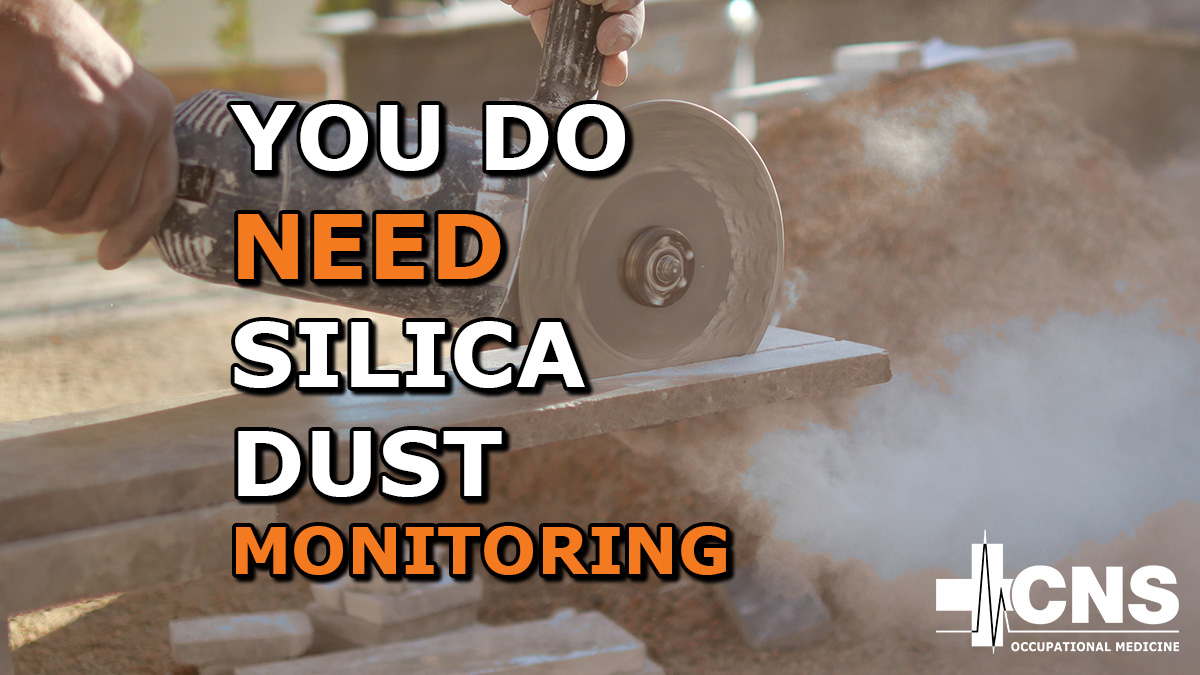
Engineered or “quartz” stone contains extremely high levels of crystalline silica, often far more than natural granite or marble. When cut, ground, or polished, it releases microscopic particles that can lodge deep in the lungs.
Unlike many workplace hazards, silica exposure is:
- Invisible
- Cumulative
- Often underestimated
- Deadly even at relatively low levels over time
In California alone, nearly 500 countertop workers have fallen ill since 2019, with many requiring lung transplants and dozens dying. Similar cases are now appearing nationwide.
Why Engineering Controls Alone Aren’t Enough
Wet cutting, ventilation systems, and dust collection are critical but they are not foolproof.
Investigators have found:
- Dry cutting still occurring in at least 25% of shops
- Respirators not worn during high-exposure tasks
- Incorrect respirator types being used (quantitative fit testing fixes this)
- No fit testing for employees who are wearing respirators
- Low compliance in small and medium-sized fabrication shops
Even in facilities that attempted dust control, researchers have measured unsafe silica levels.
That’s why OSHA requires multiple layers of protection, not just equipment.
OSHA Is Watching the Engineered Stone Industry
In 2023, the U.S. Department of Labor announced that OSHA launched a new initiative focused on enhancing enforcement and providing compliance assistance to protect workers in the engineered stone fabrication and installation industries.
This is on top of OSHA’s recent National Emphasis Program for Respirable Crystalline Silica.
Employers are now at higher risk for inspections, citations, and penalties if working under NAICS codes:
- 327991 – Cut Stone and Stone Product Manufacturing
- 423320 – Brick, Stone, and Related Construction Material Merchant Wholesalers
But more importantly, they are responsible for preventing permanent harm to their workforce.
Why Silica Medical Surveillance Is Critical
The big problem is that silicosis is incurable. Early detection is the only way to slow progression and prevent fatalities.
A compliant silica medical surveillance program helps:
- Identify early lung changes before symptoms appear
- Detect workers at increased risk
- Establish documentation for OSHA compliance
- Protect employers from enforcement and litigation exposure
- Demonstrate a good-faith commitment to worker health
CNS Occupational Medicine’s Silica Testing Program Includes:
- Silica medical history & respirator questionnaire
- Physical exam with respiratory focus
- Chest X-ray read by a certified B Reader
- Pulmonary Function Test (PFT)
- Tuberculosis (TB) testing
- Respirator fit testing
This comprehensive approach protects both workers and employers.
Common Employer Misunderstandings About Silica Compliance
Many employers believe they are compliant simply because engineering controls are in place or because they assume silica rules only apply once exposures exceed OSHA’s Permissible Exposure Limit (PEL). Unfortunately, this is one of the most common—and costly—mistakes.
Let’s look at four myths about silica compliance and the realities employers need to understand:
Myth #1: “Respirators and medical surveillance are only required if we exceed the PEL.”
Reality: OSHA’s silica standard does not work on a single threshold.
- Medical surveillance is triggered at or above the Action Level, not just the PEL.
- The Action Level is 25 μg/m³, which is half the PEL.
- Many employers unknowingly exceed the Action Level during normal operations.
This means an employer can be out of compliance even when they believe exposures are ‘low’ or controlled.
Myth #2: “Our controls are working, so we don’t need exposure monitoring.”
Reality: Exposure monitoring frequently reveals Action Level exceedances even in facilities with wet cutting, ventilation, or dust collection.
Why?
- Controls degrade over time
- Work practices vary by employee
- Short-duration tasks still create high exposures
- Small process changes can alter dust levels significantly
Without exposure monitoring, employers often don’t realize medical surveillance and respirator requirements have already been triggered.
Myth #3: “If OSHA hasn’t cited us, we must be compliant.”
Reality: OSHA inspections are limited, and many non-compliance issues go unnoticed until:
- A programmed inspection occurs
- An employee becomes ill
- A complaint is filed
- An insurance or legal review is triggered
Employers are frequently surprised to learn they were technically out of compliance for years without realizing it.
Myth #4: “We provide respirators, so we’re covered.”
Reality: Providing a respirator alone does not equal compliance.
If respirators are required or used:
- A written respiratory protection program is required
- Employees must receive medical clearance
- Fit testing is mandatory
- The respirator must actually provide adequate protection
A respirator that doesn’t fit correctly offers a false sense of safety and increases both health risk and liability.
At CNS Occupational Medicine, we help employers identify and correct compliance gaps before they become enforcement or health issues by providing:
- Silica exposure monitoring support
- Action-Level-triggered medical surveillance
- OSHA-compliant silica physicals
- Quantitative and qualitative respirator fit testing
- Clear documentation for inspections and audits
- Mobile, on-site testing to reduce downtime
The goal isn’t just compliance—it’s early detection, defensible safety programs, and real worker protection.
Why Respirator Fit Testing Is Non-Negotiable
A respirator that doesn’t fit is not protective. OSHA requires that all employees wearing tight-fitting respirators receive:
- A fit test before first use
- Annual re-testing
- Re-testing after weight changes, facial changes, or mask model changes
Yet regulators continue to find workers wearing respirators that:
- Leak
- Are the wrong size
- Are incompatible with facial features
- Provide a false sense of security
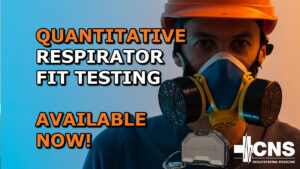
To prevent this, Quantitative Respirator Fit Testing (QNFT) uses advanced technology that measures actual leakage and assigns a numerical fit factor. By testing different respirator masks that employers make available, employers can rest assured that a specific mask type works best for their individual employee, which they should use moving forward.
Learn more about Quantitative & Qualitative Fit Testing and schedule the use of our latest testing tool: Quantifit2, the most advanced Quantitative Fit Testing device on the market.
Best Practices for Employers Exposed to Silica Risk
If your employees cut, grind, polish, or handle stone, these steps are essential:
- Assume Exposure Risk Exists: If silica-containing materials are present, monitor exposure, even if engineering controls are in place.
- Implement Medical Surveillance Early: Don’t wait for symptoms. By the time breathing problems appear, lung damage is often advanced.
- Use the Right Respirators: Not all respirators are appropriate for silica exposure. Selection must match exposure levels and job tasks.
- Fit Test Every Employee Annually: A respirator without fit testing is a compliance failure—and a safety failure.
- Train Workers in Their Preferred Language: Many affected workers are non-native English speakers. Training must be understandable to be effective.
- Document Everything: Inspection records, medical surveillance results, and fit testing documentation matter during OSHA inspections and legal scrutiny.
On-Site or In-Clinic Testing — Built for Real Operations
The tragedy unfolding in the countertop industry is preventable. Silica testing and respirator fit testing are not paperwork exercises, they are life-saving interventions.
At CNS Occupational Medicine, we understand that production schedules, staffing shortages, and deadlines are real challenges.
That’s why CNS Occupational Medicine offers:
- In-clinic testing for individual employees
- Mobile, on-site testing for entire crews
- Fast scheduling and minimal downtime
- Complete documentation for compliance
Ready to protect your team? Contact CNS Occupational Medicine at 800.551.9816 or info@cnsoccmed.com to schedule silica testing or respirator fit testing—on-site or in-clinic.