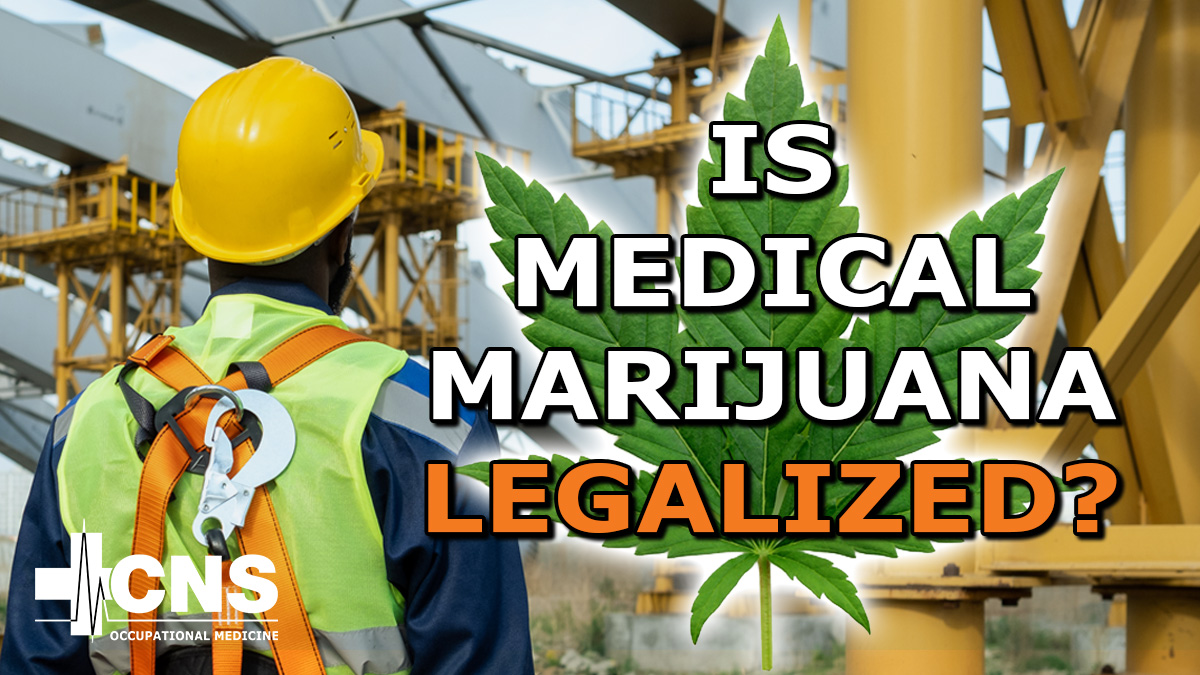
Is Medical Marijuana Legalized Now? No. The reclassification does not legalize marijuana for medical or recreational use under U.S. law. But it does change the way it’s regulated.
The federal landscape surrounding marijuana is shifting again.
On April 23, 2026, the U.S. Department of Justice and the Drug Enforcement Administration (DEA) announced that certain marijuana products, specifically FDA-approved marijuana-based drugs and those regulated under state medical marijuana programs, are now classified as Schedule III substances under the Controlled Substances Act (CSA).
While this move is designed to expand medical research and align federal policy with widespread state-level legalization, it also raises important questions for employer, especially those managing safety-sensitive employees, DOT-regulated workforces, and workplace drug testing programs.
Let’s break down what this change means and what it doesn’t.
What Changed (and What Didn’t)
Under the new order:
- FDA-approved marijuana products and state-licensed medical marijuana products are now Schedule III drugs.
- Schedule III substances are considered to have accepted medical use and a moderate to low potential for abuse.
- The DEA will hold a broader hearing on full marijuana rescheduling (from Schedule I to III) beginning June 29, 2026.
Previously, marijuana was classified as a Schedule I drug, alongside substances like heroin and LSD meaning it had no accepted medical use and a high potential for abuse.
This shift acknowledges the growing role of medical marijuana across the U.S., where most states now allow some form of use.
However, it’s critical to understand:
- This is not full federal legalization.
- Recreational marijuana remains unchanged at the federal level (for now).
- Workplace drug testing rules have NOT been automatically updated.
Hey Harrisburg, PA – We’re Here! Our New Clinic is opening on May 4th—bringing faster, smarter care for your workforce.
Why This Matters for Employers
For employers, especially in transportation, construction, manufacturing, and other high-risk industries, this reclassification creates new gray areas between federal law, state laws, and workplace safety obligations.
1. Safety-Sensitive Positions Still Require Strict Oversight
If your workforce includes safety-sensitive employees, your obligations remain largely unchanged.
- DOT-regulated employees (FMCSA, FAA, FRA, etc.) are still prohibited from using marijuana, regardless of state legality or medical authorization.
- A positive marijuana test is still a violation under DOT drug testing rules.
- There is no accepted medical explanation for marijuana use under DOT regulations.
Bottom line: Even with Schedule III status, marijuana use is still incompatible with safety-sensitive duties under federal law.
2. Drug Testing Programs Are Still Valid, But Under Pressure
Employers can still:
- Conduct pre-employment, random, post-accident, and reasonable suspicion testing
- Enforce zero-tolerance or drug-free workplace policies
However, expect increased scrutiny and challenges:
- Employees may argue medical legitimacy due to Schedule III status
- State laws may offer employee protections for off-duty use
- Courts may begin to interpret marijuana use differently over time
This creates a compliance balancing act between:
- Federal requirements
- State employment laws
- Workplace safety obligations
3. Medical Marijuana Use: A Growing HR Challenge
With marijuana now recognized federally as having medical value (in certain forms), employers may face:
- More requests for accommodation
- Increased confusion around “prescribed” vs. recommended use
- Questions about impairment vs. presence (positive test results)
Important distinctions:
- A positive drug test does not prove impairment
- Most drug tests detect metabolites, not active impairment
- Employers must still prioritize fitness for duty
4. State Laws vs. Federal Compliance
The disconnect between federal and state law is widening:
- Many states protect off-duty marijuana use
- Some states restrict pre-employment testing
- Others require employers to prove impairment, not just presence
But federal law still governs DOT-regulated programs and OSHA still expects employers to maintain safe workplaces.
This puts multi-state employers, and especially trucking companies, in a difficult position.
What Should Employers Do Now?
This is not a “wait and see” moment. It’s a time to proactively review and strengthen your workplace policies.
1. Audit Your Drug and Alcohol Policy
- Ensure policies clearly define:
- Prohibited substances
- Testing procedures
- Consequences for violations
- Distinguish between:
- DOT vs. non-DOT employees
- Safety-sensitive vs. non-safety roles
2. Train Supervisors on Reasonable Suspicion
As legal definitions evolve, observational skills become more important than ever.
Train supervisors to identify:
- Signs of impairment
- Behavioral changes
- Physical indicators
Documentation will be critical in defending employment decisions.
At CNSLearningHub.com, we offer a 75-minute Supervisor Reasonable Suspicion Training Course, and a 120-minute DOT Supervisor Drug and Alcohol Training Course.
3. Clarify Your Position on Medical Marijuana
Decide and document:
- Whether accommodations will be considered
- How safety-sensitive roles are handled
- How conflicts between state and federal law are resolved
4. Partner with Occupational Health Experts
Navigating this evolving landscape requires expertise. CNS Occupational Medicine can help employers:
- Maintain compliant drug testing programs
- Conduct fitness-for-duty evaluations
- Provide policy guidance and updates
- Deliver supervisor training and education
What Comes Next?
The June 2026 DEA hearing could lead to broader marijuana rescheduling, which may further impact:
- Workplace drug testing standards
- Federal agency policies
- Employer liability
But for now:
- Marijuana remains a controlled substance
- Safety-sensitive compliance rules remain strict
- Employers are still responsible for maintaining safe workplaces
Need Help Navigating These Changes?
CNS Occupational Medicine specializes in helping employers stay compliant while protecting their workforce.
Contact us today to review your drug testing program, update your policies, and ensure you’re prepared for what’s next.
For more information, contact us at 800.551.9816 or info@cnsoccmed.com.